
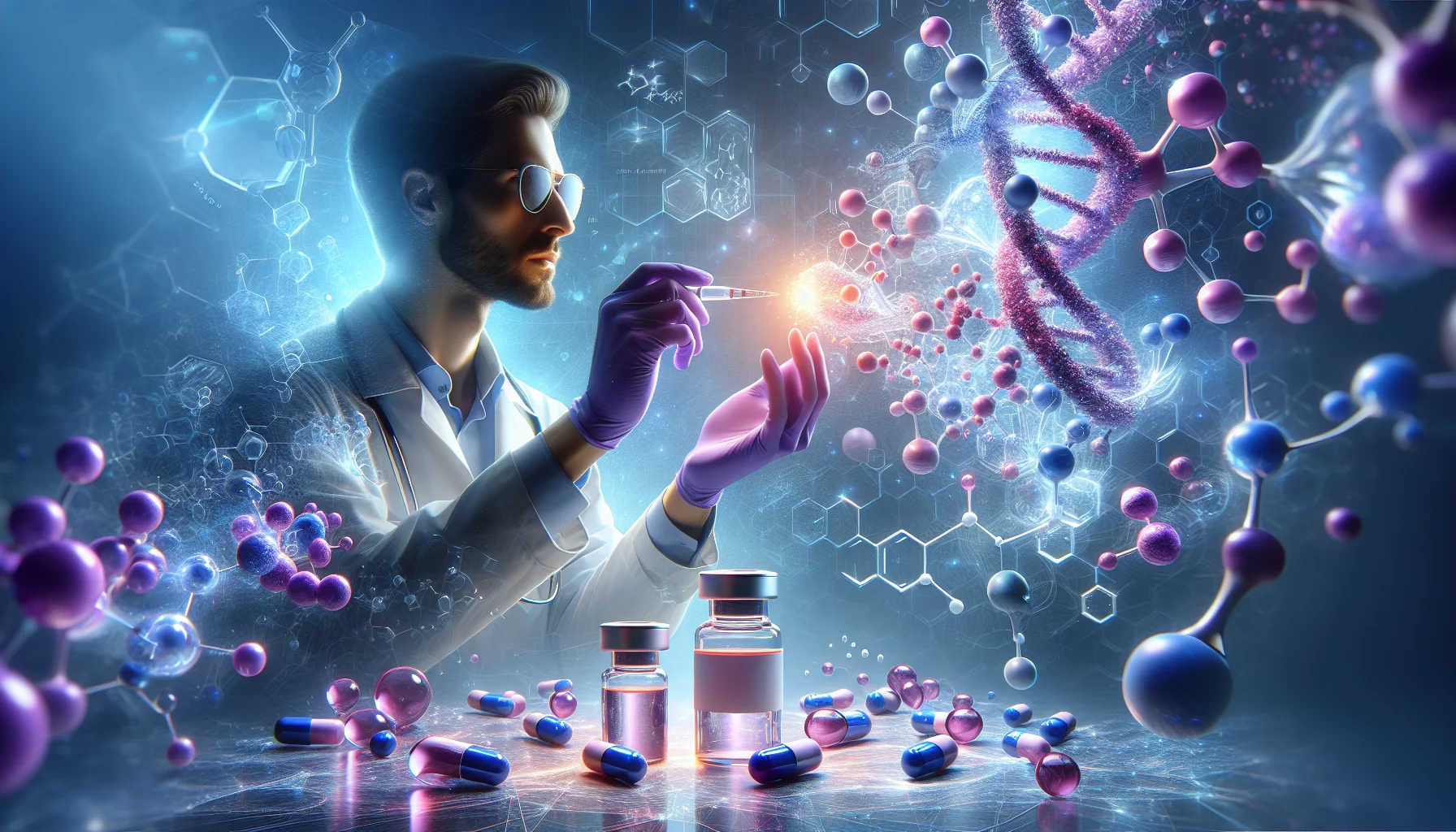
Introduction to Peptides
Peptides are short chains of amino acids, which are the building blocks of proteins. They play crucial roles in various biological processes and have gained significant attention in medical and cosmetic fields. Understanding the different types of peptides and their functions helps in appreciating their vast applications in health and science.
Classification of Peptides
Peptides can be classified based on their origin, function, and structure. This classification helps in understanding how peptides are used in various fields, including medicine, cosmetics, and research.
Types of Peptides Based on Origin
- Natural Peptides: These peptides are found naturally in living organisms. They perform essential biological functions such as hormone regulation, immune response, and cellular communication.
- Synthetic Peptides: Created in laboratories, synthetic peptides mimic natural peptides' functions and structures. They are often used in research, drug development, and cosmetics.
Types of Peptides Based on Function
- Hormonal Peptides: These peptides act as hormones, regulating various physiological processes. Examples include insulin, which regulates blood sugar levels, and oxytocin, which is involved in childbirth and social bonding.
- Neuropeptides: Found in the nervous system, these peptides play a role in transmitting signals between neurons. An example is endorphins, which are known to relieve pain and induce feelings of pleasure.
- Antimicrobial Peptides: These peptides are part of the immune system, providing a defense mechanism against pathogens. Defensins are a well-known class of antimicrobial peptides that protect against bacterial infections.
Types of Peptides Based on Structure
- Linear Peptides: These peptides have a simple, unbranched structure. They are straightforward to synthesize and study, making them popular in research.
- Cyclic Peptides: These peptides have a circular structure, giving them stability and resistance to enzymatic degradation. Their stability makes them excellent candidates for drug development.
How Peptides Work
Peptides function by interacting with specific receptors on cell surfaces, initiating various biological responses. This interaction can trigger a cascade of cellular events, leading to changes in cell behavior and function. The specific sequence and structure of a peptide determine its target receptor and function.
Applications of Peptides
Peptides are versatile and have applications in many fields, including:
Medical Applications
- Diagnostics: Peptides are used in diagnostic assays to detect diseases. For example, peptide-based tests are used to diagnose viral infections and autoimmune diseases.
- Therapeutics: Peptides are used as drugs to treat various conditions. Insulin, a peptide hormone, is a classic example used to manage diabetes.
Cosmetic Applications
- Anti-aging: Peptides are popular in anti-aging products due to their ability to stimulate collagen production, leading to improved skin texture and elasticity.
- Moisturization: Certain peptides enhance skin hydration by promoting the production of natural moisturizing factors.
Research Applications
- Protein Studies: Peptides are used to study protein interactions and functions, providing insights into cellular mechanisms.
- Drug Development: Peptides serve as models for developing new drugs with improved efficacy and specificity.
Scientific Mechanisms of Peptides
Peptides exert their effects through various mechanisms, including:
- Binding to receptors and activating or inhibiting signaling pathways.
- Modulating enzyme activity to influence metabolic processes.
- Interacting with DNA to regulate gene expression.
For example, antimicrobial peptides disrupt bacterial cell membranes, leading to cell death. Hormonal peptides like insulin regulate glucose metabolism by activating cellular pathways that facilitate glucose uptake.
Key Points
- Peptides are short chains of amino acids crucial for numerous biological functions.
- They can be classified based on origin, function, and structure.
- Peptides have diverse applications in medicine, cosmetics, and research.
- They work by interacting with specific receptors and influencing cellular processes.
Further Reading
To learn more about the exciting world of peptides, explore our articles on Peptide Therapeutics and Cosmetic Peptides.